
Regional Spotlight: Nunavut
Nunavut, Canada’s newest and northernmost territory, is a land of scale, resilience and opportunity. Covering a fifth of the country’s landmass, its sweeping Arctic landscapes stretch across two million square kilometres. The territory’s economy has its roots in traditional harvesting and public services, but it is rapidly diversifying. Mining remains a cornerstone, with gold and iron ore leading development, while emerging sectors such as clean energy, tourism and conservation-based economies are gaining momentum.
Though vast, Nunavut is home to just over 41,000 people in 25 close-knit communities. With a median age of only 27.1 years – the youngest in Canada – Nunavut’s population represents a growing workforce and a generation poised to shape the future of the North. Nunavut’s GDP has surpassed $4 billion, reflecting steady growth and increasing investment in infrastructure, renewable energy and digital connectivity. These trends signal a maturing economy with room for innovation and strategic partnerships.
For investors, Nunavut offers a unique proposition: a jurisdiction with strong Indigenous governance, clear regulatory structures and a commitment to sustainable development. The territory’s Inuit-majority population – 85% of residents – ensures that investment must align with community values, including stewardship of the land, cultural preservation and inclusive growth. With expanding transportation networks, clean energy corridors and a growing conservation economy, Nunavut is laying the groundwork for responsible investment and long-term prosperity.
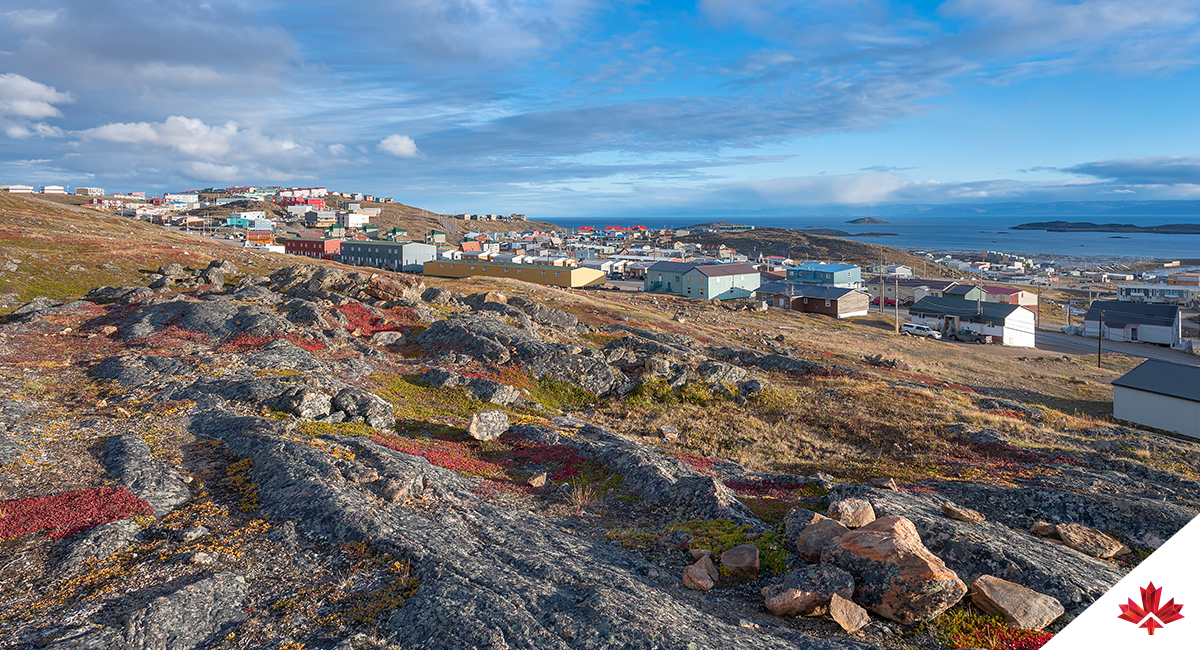
A panoramic view of Iqaluit, Nunavut’s capital and a centre for governance, culture and northern innovation. Its landscape reflects the raw, expansive character of the Arctic, where land, sky and community converge.
Foreign Direct Investment (FDI) Attraction
Nunavut is attracting attention from global investors due to:
- Natural wealth that spans land and sea, offering vast mineral reserves and abundant marine resources;
- Its strategic Arctic location, offering access to the Northwest Passage and European markets;
- Strong Indigenous partnerships, with Inuit-led corporations and conservation economies driving inclusive growth; and
- Federal infrastructure investments, including a recent $1 billion commitment to northern trade and transportation infrastructure, with projects such as the Qikiqtarjuaq Deep Sea Port and the Kivalliq Hydro-Fibre Link.
Infrastructure and Trade: Building Nunavut’s Economic Backbone
Nunavut’s infrastructure landscape is evolving rapidly, with strategic investments aimed at improving connectivity, supporting economic diversification and unlocking trade potential. One of the most significant developments is the proposed Qikiqtarjuaq Deep Sea Port, a project with a total estimated cost of over $200 million, including a $40 million federal investment through the National Trade Corridors Fund. Once completed, the port will serve as a critical access point for marine transportation and resource development, while also supporting local employment, food security and offshore fisheries in Nunavut.
Another transformative project is the Grays Bay Road and Port Project, which would connect Nunavut to the national highway system for the first time. This proposed all-season road and deep-water port would link mineral-rich regions of western Nunavut to markets in the south, reducing transportation costs and enabling year-round access. The project is a joint initiative between the Kitikmeot Inuit Association and the Government of Nunavut, and it represents a major step toward integrating Nunavut into Canada’s broader trade and logistics network.
Recent federal commitments underscore this momentum. In November 2025, the Government of Canada announced a $1 billion investment to strengthen trade and transportation infrastructure across the North. This funding will accelerate projects that improve Arctic supply chains, enhance community access and position Nunavut as a strategic hub for global markets.
Clean energy and digital connectivity are also on the horizon with the Kivalliq Hydro-Fibre Link, a proposed corridor that would deliver renewable hydroelectric power and high-speed broadband from Manitoba to Nunavut. This initiative, led by the Kivalliq Inuit Association, is expected to reduce diesel dependence, lower emissions and support economic growth through improved communications infrastructure. Meanwhile, air transport remains one of Nunavut’s top industries, with scheduled flights serving as lifelines for trade, tourism and essential services. The territory’s reliance on aviation underscores the importance of continued investment in airport infrastructure and regional air carriers.
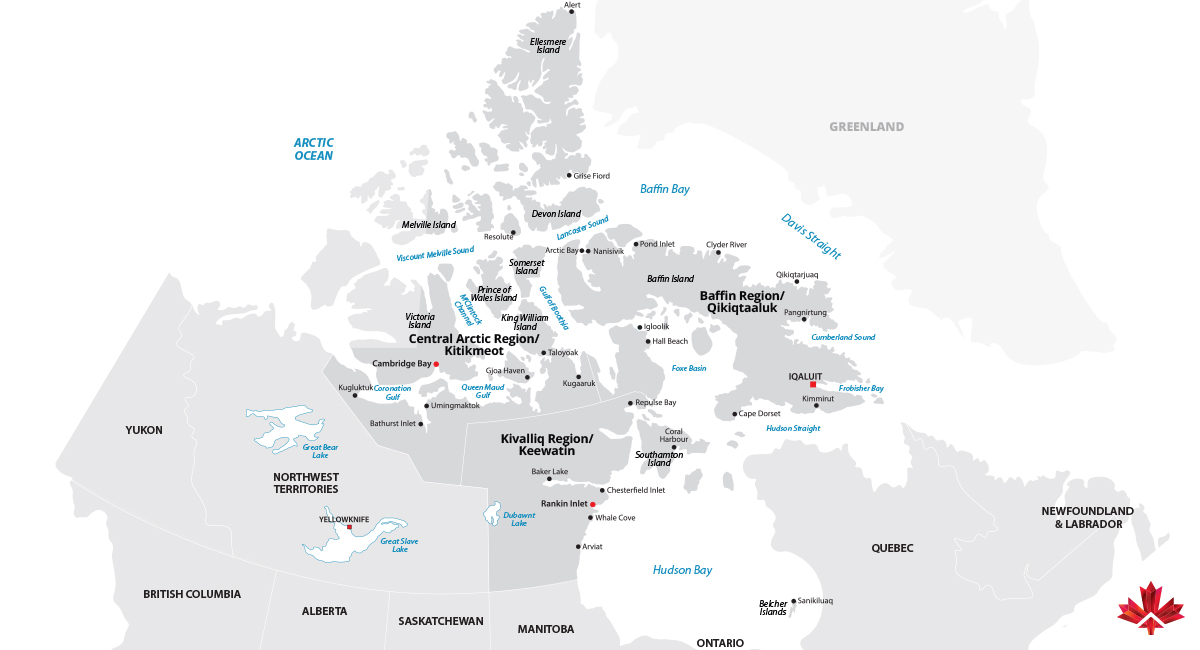
Map of Nunavut showing its three regions – Qikiqtaaluk (Baffin), Kivalliq (Keewatin), and Kitikmeot (Central Arctic) – along with major communities and surrounding Arctic waters.
Strategic Sectors Driving Nunavut’s Investment Readiness
- Mining: Nunavut’s rich deposits of gold, diamonds, iron ore and other critical minerals make mining the territory’s leading economic driver – generating substantial revenue for private companies and, increasingly, for the territorial government through royalties and taxes.
- Fisheries: Emerging offshore fisheries are growing, with expanding exports of turbot, shrimp and Arctic char supported by new local processing infrastructure.
- Tourism: Eco-tourism and cultural tourism are expanding, supported by Inuit-owned operators.
- Arts & Culture: Globally recognized Inuit art, carvings, and crafts contribute to exports and cultural preservation.
Attracting FDI: Laying the Groundwork for Global Partnerships
Case Study: Agnico Eagle Mines
Agnico Eagle Mines, a Canadian multinational, operates major gold projects in Nunavut, including the Meadowbank complex (with the Amaruq mine), the Meliadine mine and the Hope Bay site, currently under active exploration. Agnico Eagle’s partnerships with Inuit organizations support training, employment and housing, while its infrastructure investments such as haul roads and processing facilities demonstrate the kind of long-term commitment typical of FDI. The company’s presence also signals to global investors that Nunavut is a viable location for large-scale resource development.
Case Study: Inuit Blue Conservation Economy
The Tallurutiup Imanga National Marine Conservation Area (NMCA) is a landmark initiative that blends environmental stewardship with economic development. While primarily funded by Canadian public sources, the NMCA has attracted international attention and philanthropic support, particularly for its innovative approach to conservation-focused job creation. Through Inuit-led governance and benefit agreements, the NMCA supports employment in stewardship, tourism and food security. These efforts build local capacity and demonstrate that Nunavut can support sustainable, community-driven investment models – an appealing prospect for foreign investors seeking ethical and impactful opportunities.
Laying the Groundwork for FDI
These investments – whether in mining or conservation – are helping to build the infrastructure, workforce and governance frameworks that make Nunavut more attractive to foreign capital. By demonstrating successful partnerships with Inuit organizations and delivering tangible community benefits, they reduce perceived risks and increase investor confidence. As Nunavut continues to diversify its economy and strengthen its institutions, the territory is well-positioned to attract FDI in sectors such as clean energy, tourism and advanced resource development.
Partner Spotlight
Inuit Economic Development Corporations are central to Nunavut’s economic transformation. Inuit-owned entities such as Sakku Investments Corporation, Qikiqtaaluk Corporation and the Kitikmeot Inuit Association play a leading role in joint ventures, infrastructure development and the emerging conservation economy. Their investments span sectors from mining to tourism, often in partnership with public and private sector actors. These corporations are also key drivers of the Inuit Blue Conservation Economy, which integrates traditional knowledge with modern economic tools to create jobs in stewardship, food security and sustainable tourism.
The Canadian Northern Economic Development Agency (CanNor) is a vital federal partner in supporting Indigenous-led economic growth across the North. In 2024 alone, CanNor invested over $1.4 million in 10 Indigenous-led projects across Nunavut and other territories. These included infrastructure upgrades, digital adoption, trades training and support for creative industries like cinematography. Through programs like IDEANorth and the Northern Indigenous Economic Opportunities Program, CanNor helps Indigenous businesses scale up, modernize and diversify – laying the groundwork for long-term prosperity and community resilience
The Smart Prosperity Institute, a policy think tank based at the University of Ottawa, is helping shape the future of sustainable development in Nunavut. Their research on Inuit-led conservation economies highlights how investments in marine protected areas and country food systems can generate economic returns while preserving culture and ecosystems. For example, the country food economy around Tallurutiup Imanga NMCA is valued at $33 million annually, and Inuit Guardians programs have delivered an estimated $27 million in returns. These models offer a compelling case for scaling up conservation-led development across the territory.
Logo for Nunavut, featuring text in four languages – Inuktitut syllabics, Inuktitut (Roman orthography), English and French – reflecting the territory’s commitment to linguistic and cultural inclusion.
“Nunavut is home to Arctic opportunity, where Indigenous leadership and community priorities are shaping sustainable investment. At Invest in Canada, we’re committed to helping global companies connect with local partners to build lasting, inclusive growth in the North.”
Laurel Broten, CEO, Invest in Canada